
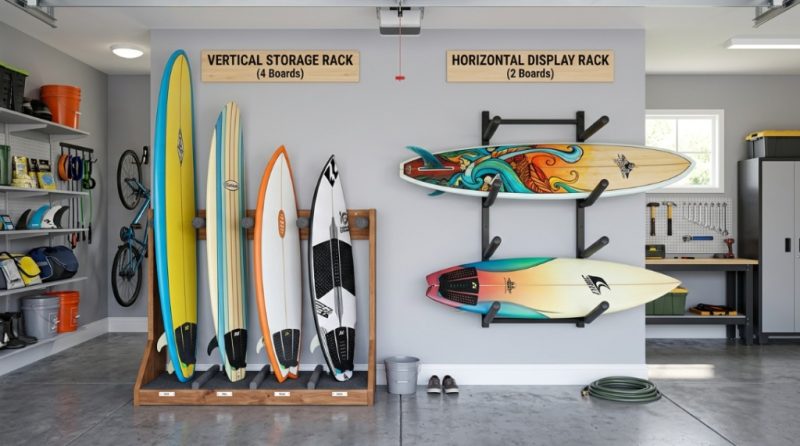
A surfer moved into a new apartment and immediately faced the eternal question: where do I put this 7-foot board without it falling over, getting damaged, or making my living room look like a surf shop dumpster? The answer is a best surfboard stand — a dedicated display and storage solution that holds boards securely upright while protecting them from dings, falls, and pressure damage. The best indoor surfboard storage solutions in 2025 go beyond basic function to become furniture-quality pieces that display boards as art while serving the practical purpose of keeping them safe and accessible. Whether you want a minimalist floor stand, a wall-display mount, or a furniture-grade rack, the right choice depends on your space, board count, and aesthetic preferences.
Surfboard stands have evolved from simple utility products into a genuine home décor category. Today’s options range from raw functionality (basic foam floor stands for $15) to design-forward furniture (hardwood display stands for $200+) and everything between. This evolution reflects the reality that most surfers store boards in visible living spaces — bedrooms, living rooms, hallways — not hidden garages. The stand needs to work both as protective storage and as a visual element in your home. Here’s how to choose the best surfboard stand for home storage that protects your board, fits your space, and looks good doing it.
What Types of Surfboard Stands Are Available for Home Use?
The main surfboard stand types are freestanding floor stands (vertical or angled), wall-mounted display racks, furniture-grade display stands, and minimalist cradle stands — each offering different combinations of protection, aesthetics, and space efficiency.
Stand types compared:
| Stand Type | Best For | Space Used | Aesthetic Appeal | Price Range |
|---|---|---|---|---|
| Freestanding vertical | Quick access, single boards | Minimal floor (1–2 sq ft) | Moderate–high | $25–$80 |
| Freestanding angled/cradle | Display, living rooms | Moderate (2–4 sq ft) | High | $30–$150 |
| Wall-mounted display | Art display, space saving | Zero floor space | Very high | $30–$120 |
| Furniture-grade stand | Living room centerpiece | Moderate | Excellent | $80–$300 |
| Simple foam blocks | Utility, hidden storage | Minimal | Low | $10–$25 |
How Do You Choose Between a Floor Stand and Wall Mount?
Choose floor stands for easy daily access and portability (renters, frequent use), and wall mounts for maximum space savings and display aesthetics (permanent homes, boards-as-art). Floor stands require floor space; wall mounts require mounting hardware and leave holes.
Decision factors:
- Choose floor stand if: You grab your board frequently (easy access), you rent (no wall holes), you want to move it around the room, or you prefer a standalone furniture piece.
- Choose wall mount if: Floor space is limited, you want the board displayed as art, you own your home (permanent mounting), or you have multiple boards to store vertically on one wall.
- Choose both if: You display favorite boards on walls (art/retired boards) and keep your daily driver on a floor stand for quick access.
For daily-use boards, floor stands win on convenience — grab and go without lifting off a wall. For display boards, vintage boards, or boards you ride less often, wall mounting creates a striking visual while freeing floor space.
What Features Make a Surfboard Stand Worth Buying?
The features worth paying for are padded contact points (prevent dings), stable base (prevents falls), appropriate sizing (fits your board), quality materials (lasts years), and aesthetic design (looks good in your home) — these separate a good stand from a waste of money.
Essential features:
- Padded contact (essential): Every point where the board touches the stand needs soft padding — foam, felt, rubber, or cork. Hard materials ding fiberglass.
- Stability (essential): The stand must hold the board securely without tipping. Weighted bases, wide footprints, or wall-lean designs prevent falls.
- Correct sizing (essential): The stand must accommodate your board’s width and weight. Shortboards and longboards have different support needs.
- Durable materials (important): Bamboo, hardwood, quality metal, or high-density foam that lasts years. Cheap plastic breaks.
- Aesthetic appeal (important for living spaces): If the stand lives in a visible room, it should complement your décor rather than looking like garage equipment.
- Non-marking base (important): Won’t scratch hardwood floors or stain carpet. Rubber feet or felt pads on the bottom.
Finding the right rack is only half the battle when it comes to creating a beautiful indoor display. Once your boards are securely mounted, proper illumination can transform a simple storage corner into a stunning focal point. If you want to elevate the ambiance of your entire room or are setting up a temporary display area for an event, looking into DIY and Professional Wedding Lighting Services can give you creative ideas on how to use uplighting, fairy lights, or LED tracks to perfectly showcase your surf gear.
What Stand Material Looks Best Indoors?
Bamboo and natural hardwood stands look best indoors — they blend with home furniture, age attractively, and communicate quality. Metal stands suit modern/industrial spaces. Avoid raw plastic or foam in visible living areas.
Material aesthetics:
- Bamboo: Warm, natural, sustainable look. Fits most interior styles. Lightweight yet strong. The most popular choice for indoor stands.
- Hardwood (walnut, oak, ash): Premium, furniture-grade appearance. Beautiful grain and finish. Heavier and more expensive but looks like quality furniture.
- Powder-coated metal: Clean, modern, industrial aesthetic. Black or white metal suits contemporary interiors. Durable and minimal.
- Cork: Natural, soft, protects boards inherently. Unique look. Eco-friendly. Less common but distinctive.
- Acrylic/clear: Nearly invisible — the board appears to float. Ultra-modern and minimalist. Shows dust easily.
- Foam/plastic (hide from view): Functional but not decorative. Best for closets, garages, or hidden storage where aesthetics don’t matter.
How Many Boards Can Indoor Stands Hold?
Single-board stands are most common for indoor display, but multi-board stands holding 2–4 boards exist for surfers with larger quivers who want all boards accessible in one location.
Capacity options:
- Single-board floor stand: Displays one board prominently. Best as a living room/bedroom feature piece. Most aesthetically clean.
- Dual-board stand: Holds two boards side-by-side or stacked. Good for couples who surf or surfers with a daily driver and backup.
- Multi-board rack (3–6): Holds several boards in a compact footprint. Best for dedicated surf areas (spare room, garage) rather than living spaces.
- Wall-mounted multi-board: Stack 2–5 boards vertically on one wall section. Maximizes capacity in minimal space.
For living room display, single-board stands look cleanest and most intentional. Multiple boards in a living area can look cluttered unless the space is specifically designed for it. If you have 3+ boards, consider a multi-board rack in a hallway, spare room, or garage with your most-used board on a display stand in the living area.
How Do You Protect Boards From Damage on a Stand?
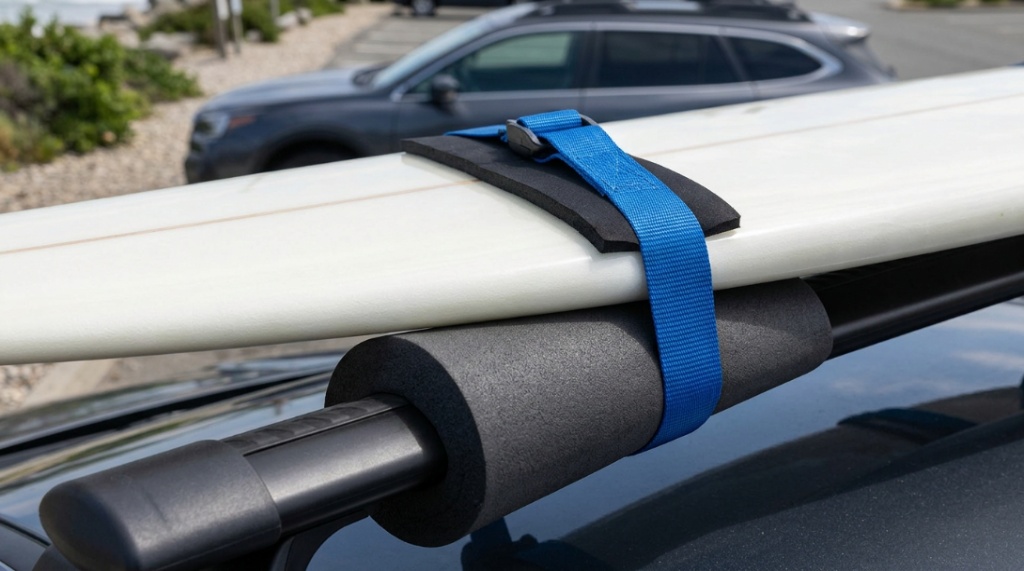
Protect boards by ensuring all stand contact points are padded (foam, felt, or rubber), the board rests on its bottom (not balanced on its rail), weight is distributed across multiple support points, and the stand prevents sideways falling.
Protection considerations:
- Padding everywhere: Every contact point — cradle, lean point, base rest — needs soft material. Check padding quality before buying; cheap stands often have inadequate or thin padding.
- Flat bottom rest: The board should rest on its flat bottom, not balanced on its thin rail edge. Rail resting creates pressure dents over time.
- Multiple contact points: The board’s weight should distribute across 2–3 support points rather than concentrating on a single spot.
- Anti-fall security: The stand should prevent the board from tipping sideways. Cradle designs inherently prevent this; lean-style stands need adequate angle and friction.
- Temperature awareness: Keep stands away from direct sunlight through windows, heating vents, and radiators that could heat the board unevenly.
What’s the Best Surfboard Stand for Different Budgets?
Budget $25–$60 for a quality functional stand, $60–$120 for a stand with good aesthetics and premium materials, and $120–$300 for furniture-grade display pieces that function as home décor. Even budget stands protect boards well when padded properly.
Budget breakdown:
- $15–$25 (basic): Foam blocks, simple plastic stands. Functional protection but not decorative. Best for garages, closets, or hidden storage.
- $25–$60 (good value): Bamboo or metal stands with padding. Look decent in living spaces. Protect boards well. Best value for most surfers.
- $60–$120 (premium): Quality hardwood or designer metal. Furniture-quality aesthetics. Well-padded. Suitable for prominent display in nice homes.
- $120–$300 (luxury): Handcrafted hardwood, custom designs, furniture-grade finish. Statement pieces. For surfers who want their stand to be as beautiful as the board.
For most surfers wanting indoor storage that looks good and protects boards, the $30–$80 range delivers everything needed. Spend more only if you specifically want furniture-grade aesthetics for a prominent display location.
Conclusion
Choosing the best surfboard stand for home storage means balancing protection, aesthetics, space efficiency, and budget based on where the stand will live in your home. A living room display demands attractive materials (bamboo, hardwood) and clean design. A bedroom or hallway can use simpler, more functional options. A garage or closet only needs basic padded protection regardless of appearance.
Prioritize padded contact points and stable design to protect your board investment, then choose materials and aesthetics that complement your living space. Budget $30–$80 for quality stands that look good and protect well, or invest $100+ for furniture-grade display pieces that serve as both storage and home décor. Whatever you choose, ensure proper padding at every contact point — because the prettiest stand in the world is worthless if it dings your board.
Where in your home will the stand live and what’s your board size? Share in the comments — I’ll recommend the specific stand type, material, and price range that fits your space and board perfectly.
Frequently Asked Questions
What is the best surfboard stand for home use?
A bamboo or hardwood freestanding vertical stand in the $30–$80 range is best for most home use — it’s attractive enough for living spaces, well-padded to protect boards, stable, and portable. Wall-mounted displays are best if floor space is limited and you want art-like presentation.
Will a surfboard stand damage my board?
Not if properly padded. Quality stands have foam, felt, or rubber at every contact point. The board should rest on its flat bottom (not rail) with weight distributed. Cheap stands with hard, unpadded surfaces can create pressure dents and dings. Always verify padding quality before use.
Can I display a surfboard in my living room?
Yes — surfboards make striking wall art or floor displays. Choose a furniture-quality stand or wall mount in materials that complement your décor (bamboo, hardwood, clean metal). A single board on a quality stand is a conversation piece. Keep it away from direct sunlight through windows to prevent UV damage.
How much does a good surfboard stand cost?
Quality surfboard stands range from $25–$80 for functional/attractive options and $80–$300 for furniture-grade display pieces. Budget $30–$60 for a stand that looks good in a living space and protects your board well. Spend more only for premium aesthetics in prominent display locations.
Do I need a different stand for longboards vs shortboards?
Some stands are universal, but check weight capacity and size compatibility. Longboards (9’+) are heavier and longer — they need sturdier stands with wider bases. Shortboards are lighter and work with most standard stands. Verify the stand is rated for your board’s weight and length before purchasing.
Is vertical or horizontal storage better for surfboards at home?
Both are safe when properly supported. Vertical saves more floor space and works well for shortboards. Horizontal (wall-mounted or rack) displays the board’s design better and works for all sizes. Choose based on your space and aesthetic preference — neither damages boards when properly padded and supported.
