
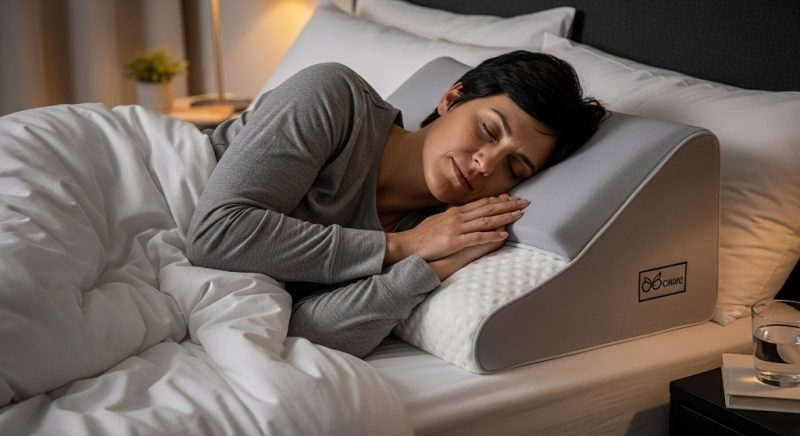
A wedge pillow for sleep apnea is a firm, angled support pillow that elevates the upper body to help keep airways open during sleep. By raising the head and torso 6–12 inches, it can reduce airway collapse, snoring, and nighttime breathing interruptions.
If you wake up tired despite sleeping for hours, your sleeping position may be part of the problem. Many people with mild to moderate sleep apnea experience worse symptoms when lying flat. Gravity pulls the tongue and soft tissues backward, narrowing the airway. This leads to interrupted breathing, frequent awakenings, and reduced oxygen levels.
A wedge pillow changes that angle. Instead of sleeping flat, your upper body stays elevated. Clinical sleep-position studies show that positional therapy can reduce apnea severity in patients whose symptoms worsen while sleeping on their back. Elevation also helps reduce acid reflux and snoring, which often overlap with sleep apnea symptoms.
This guide explains how to choose the best wedge pillow for sleep apnea relief based on height, firmness, material, and real-world effectiveness. You will learn what works, what does not, and how to select a pillow that supports long-term breathing comfort.
How Does a Wedge Pillow Help Sleep Apnea Symptoms?
A wedge pillow helps sleep apnea by elevating the upper body, which reduces airway obstruction and improves airflow during sleep.
Sleep apnea occurs when breathing repeatedly stops during the night. In positional obstructive sleep apnea, symptoms worsen when lying flat on the back. Elevation changes airway alignment and reduces tissue collapse.
Key Benefits of Using a Wedge Pillow
- Supports airway openness through upper-body elevation
- Reduces snoring intensity
- Improves oxygen flow
- Supports CPAP therapy comfort
- Reduces acid reflux that worsens apnea symptoms
A clinical sleep-position review published in the Journal of Clinical Sleep Medicine reported that positional therapy reduced apnea severity by up to 50% in selected patients with position-dependent obstructive sleep apnea. While wedge pillows do not replace CPAP machines in moderate to severe cases, they are widely recommended as supportive therapy.
What Height Wedge Pillow Is Best for Sleep Apnea Relief?
The best wedge pillow height for sleep apnea relief is typically between 7 and 12 inches because this range supports airway alignment without causing neck strain.
The correct elevation depends on body type, sleeping position, and symptom severity.
Recommended Height by Sleep Need
| Height | Best For |
|---|---|
| 6–7 inches | Mild snoring and light elevation support |
| 8–10 inches | Moderate sleep apnea relief |
| 10–12 inches | Severe reflux with positional apnea |
Most sleep specialists recommend starting with an 8-inch wedge pillow. It balances airway support with spinal comfort.
If elevation feels uncomfortable, consider a gradual incline wedge instead of a steep triangle design.
Which Wedge Pillow Shape Works Best for Sleep Apnea?
The best wedge pillow shape for sleep apnea is a gradual incline wedge because it maintains spinal alignment and reduces neck pressure.
Not all wedge pillows provide the same comfort level. Shape affects breathing posture and long-term usability.
Common Wedge Pillow Shapes Compared
- Triangle wedge – strong elevation but steeper angle
- Gradual incline wedge – better spinal support
- Contoured wedge – supports neck and shoulders
- Adjustable wedge – customizable height levels
A gradual incline wedge is usually preferred for nightly sleep apnea support because it distributes body weight evenly.
What Material Is Best for a Sleep Apnea Wedge Pillow?
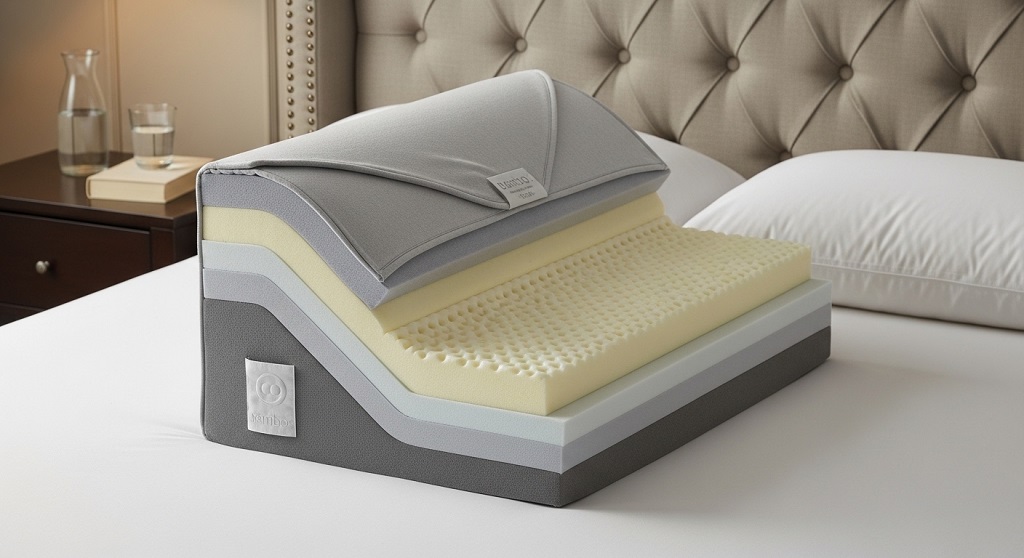
The best wedge pillow material for sleep apnea is high-density memory foam because it maintains elevation support without collapsing overnight.
Material determines durability and airway alignment stability.
Material Options Explained
- Memory foam – stable support and pressure relief
- Polyurethane foam – affordable but less durable
- Latex foam – breathable and firm support
- Hybrid layered foam – balanced comfort and structure
Memory foam wedge pillows maintain shape longer than fiberfill alternatives. This is important because lost elevation reduces airway benefits.
Can a Wedge Pillow Replace CPAP Therapy?
No, a wedge pillow cannot replace CPAP therapy for moderate or severe sleep apnea, but it can improve comfort and reduce symptoms in mild cases.
Continuous Positive Airway Pressure (CPAP) remains the most effective treatment for obstructive sleep apnea. However, wedge pillows are frequently used alongside CPAP machines to improve mask tolerance and reduce pressure discomfort.
Positional therapy studies show that elevation can reduce apnea events in patients whose symptoms worsen when sleeping flat. For these individuals, wedge pillows act as a practical nightly support tool.
What Features Should You Look for in the Best Wedge Pillow for Sleep Apnea?
The best wedge pillow for sleep apnea should include proper elevation height, firm support foam, breathable cover fabric, and stable positioning during sleep.
Essential Features Checklist
- Elevation between 7 and 12 inches
- Medium-firm or firm memory foam core
- Washable breathable cover
- Non-slip base support
- Wide shoulder-friendly design
Wide wedge pillows reduce rolling during sleep. Stability improves breathing consistency throughout the night.
Is Sleeping on Your Side with a Wedge Pillow Better for Sleep Apnea?
Yes, sleeping on your side with a wedge pillow can further reduce airway blockage compared to sleeping on your back.
Side sleeping reduces tongue collapse and improves airflow naturally. Combining side sleeping with elevation creates stronger positional therapy results.
Sleep research shows lateral sleeping positions reduce apnea severity in many positional apnea patients. Using a wedge pillow makes side sleeping more stable and comfortable.
How Firm Should a Wedge Pillow Be for Sleep Apnea Relief?
A wedge pillow for sleep apnea should be medium-firm to firm so it maintains elevation without flattening during the night.
Soft wedge pillows compress under body weight. This reduces airway alignment benefits.
Firm support ensures consistent elevation across several hours of sleep. High-density foam performs best for long-term structural stability.
Are Wedge Pillows Effective According to Sleep Research?
Yes, wedge pillows can reduce apnea symptoms in position-dependent cases by improving airway alignment and reducing gravitational obstruction.
A positional therapy evaluation published in sleep research literature reported meaningful reductions in apnea severity among patients whose breathing worsened when lying flat. Elevation improved airflow by changing airway geometry.
Another hospital-based positional therapy review found that upper-body elevation reduced snoring frequency and nighttime awakenings in selected patients.
These findings support wedge pillows as a useful non-invasive sleep apnea support strategy.
Who Should Use a Wedge Pillow for Sleep Apnea?
A wedge pillow is best for people with mild obstructive sleep apnea, positional apnea, snoring issues, or reflux-related breathing interruptions.
Best Candidates for Wedge Pillow Therapy
- Back sleepers with snoring
- Mild sleep apnea patients
- CPAP users needing extra comfort
- People with GERD-related breathing disruption
- Pregnant sleepers needing elevation support
Individuals with severe sleep apnea should consult a sleep specialist before relying on positional therapy alone.
How Long Does It Take to See Results Using a Wedge Pillow?
Most users notice snoring reduction and breathing comfort improvements within the first few nights of consistent wedge pillow use.
However, measurable apnea reduction varies by individual condition severity.
Consistency matters more than occasional use. Nightly elevation helps maintain airway alignment.
How Do You Choose the Right Size Wedge Pillow for Your Body?
The right wedge pillow size should support the entire upper torso, not just the head and neck.
Short wedge pillows only elevate the head. This can create neck strain instead of improving airflow.
Correct Size Selection Tips
- Choose shoulder-width designs
- Support head, neck, and upper back
- Avoid narrow triangle wedges
- Select breathable cover materials
Full-torso support improves comfort and therapy effectiveness.
Conclusion: Is a Wedge Pillow Worth Using for Sleep Apnea Relief?
A wedge pillow is a practical and research-supported solution for improving airflow during sleep, especially for people with mild or position-dependent sleep apnea. By elevating the upper body between 7 and 12 inches, it reduces airway obstruction and supports better breathing alignment.
Unlike medication-based solutions, wedge pillows offer a non-invasive and affordable strategy that fits into everyday sleep routines. They also improve snoring control, reflux symptoms, and CPAP comfort when used consistently.
If you experience interrupted sleep, loud snoring, or morning fatigue, choosing the best wedge pillow for sleep apnea relief can make a measurable difference in sleep quality.
Start by selecting the correct height, firmness level, and supportive material. Small changes in sleep posture often lead to meaningful improvements in nighttime breathing.
Take action today by upgrading your sleep setup with a clinically supported wedge pillow designed for airway alignment and long-term comfort.
Frequently Asked Questions About the Best Wedge Pillow for Sleep Apnea
Does a wedge pillow stop sleep apnea completely?
No, a wedge pillow does not cure sleep apnea but helps reduce symptoms by improving airway alignment during sleep.
What wedge pillow angle works best for breathing support?
An elevation angle between 30 and 45 degrees provides effective airway positioning for most sleepers.
Can wedge pillows reduce snoring immediately?
Many users notice reduced snoring within the first few nights because elevation prevents airway collapse.
Are memory foam wedge pillows better than regular foam?
Yes, memory foam wedge pillows maintain shape longer and provide consistent elevation support.
Is sleeping upright better than sleeping flat with sleep apnea?
Yes, sleeping with upper-body elevation improves airflow and reduces obstruction compared to flat sleeping positions.
Can wedge pillows help acid reflux and sleep apnea together?
Yes, wedge pillows reduce stomach acid movement while supporting airway positioning, which improves both conditions.
Should side sleepers still use wedge pillows?
Yes, side sleepers benefit from added elevation that stabilizes airway alignment during the night.
Read More Also: How to Choose Stable Fishing Kayaks for Better Balance on Water
Discover More: How to Select Smart Home Gadgets Women Love Most
