
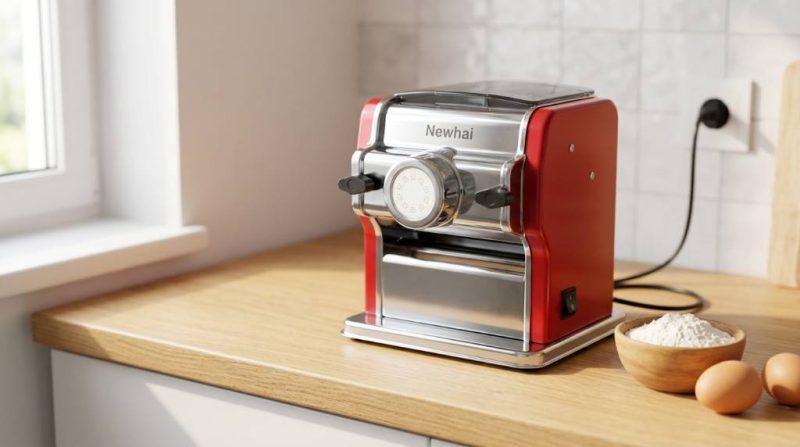
Yes, the Newhai 550W is a strong choice for homemade noodles when you want speed and consistent thickness. Its 2-in-1 design presses dough and cuts noodles, while the 550W motor handles regular batches efficiently.
Fresh pasta continues to attract home cooks seeking better ingredient control and texture. Meanwhile, the machine offers adjustable dough thickness from 0.3mm to 5mm.
Key Takeaways
- Dual function: It rolls dough and cuts noodles without changing the basic workflow.
- 550W motor: The motor provides enough power for routine homemade noodle batches.
- Two noodle widths: The included blade produces 2mm thin noodles or 6mm wider noodles.
- Adjustable sheets: You can set dough thickness between 0.3mm and 5mm.
- Heavy construction: The stainless steel body offers stability during operation.
- Main limitation: Its 44-pound weight makes frequent relocation inconvenient.
Newhai 550W Pasta Maker: What Makes It Different?
The Newhai 550W takes a different approach from lightweight manual pasta rollers. Instead, it combines dough pressing and noodle cutting inside one commercial-style machine. Its 200mm roller width also gives you a useful working area for regular homemade batches.
That design becomes especially useful when you prepare several portions at once. You can also review commercial kitchen energy conservation ideas when planning a more efficient kitchen workflow.
The machine uses food-grade 304 stainless steel for its main construction. That material suits a kitchen environment because it resists corrosion and handles frequent use better than many lightweight alternatives.
However, this is not a compact countertop gadget for occasional novelty cooking. Its approximately 44-pound weight gives it stability, but it also demands a dedicated storage location.
Core Specifications at a Glance
- Motor: 550W electric motor
- Material: Food-grade 304 stainless steel
- Roller width: 200mm or about 7.8 inches
- Dough thickness: 0.3mm to 5mm
- Noodle widths: 2mm and 6mm
- Approximate dimensions: 14.4 × 13.6 × 12 inches
- Approximate weight: 44 pounds
Testing the 550W Motor With Homemade Dough
The motor represents one of this machine’s biggest advantages during routine noodle preparation. Available testing reports show that it handled standard egg-flour dough without obvious stalling.
During reported testing, the rollers flattened dough consistently at the selected setting. The 2mm cutter produced fine noodles, while the 6mm cutter created broader strands suitable for soups and stir-fries.
Still, dough preparation matters as much as motor power. Very wet dough can stick, while excessively dry dough can increase resistance and produce rougher sheets.
For better results, knead your dough thoroughly before feeding it through the rollers. Then allow the dough to rest before repeated rolling, because rested gluten usually produces smoother sheets.
Reported stress testing also showed an important limitation with heavier whole-wheat dough. Extended operation caused the motor to become hot, while cutting quality declined after sustained running.
Therefore, treat the Newhai as a capable batch machine rather than an unlimited commercial production line. Shorter operating cycles make more sense for home kitchens and help prevent unnecessary motor strain.
How the Two-in-One System Works
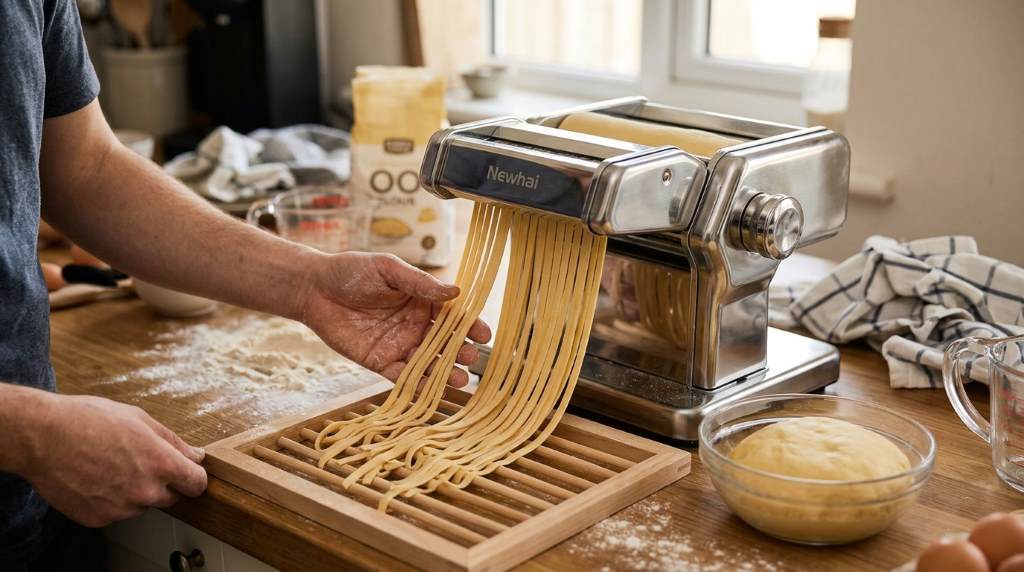
The first function presses dough into a controlled sheet. The second function cuts that sheet into either narrow or wider noodles.
Unlike some manual machines, you do not need to operate a separate roller before using the cutter. That integrated workflow reduces handling and keeps the process relatively straightforward.
The dual-use blade supports 2mm and 6mm noodle widths. That range covers many everyday applications, although specialty pasta shapes require different equipment.
Dough Thickness Control and Noodle Quality
Thickness control may matter more than raw motor power when you care about final texture. The Newhai provides an adjustable range from 0.3mm to 5mm, giving cooks substantial control over sheet thickness.
For delicate noodles, thinner sheets can create a lighter bite. Conversely, thicker sheets work better when you want noodles that remain substantial after boiling.
The machine also works beyond traditional pasta sheets. You can use controlled thickness for dumpling wrappers and other rolled dough preparations.
Before cutting, dust the sheet lightly with flour if the surface feels tacky. However, avoid excessive flour because it can dry the dough and reduce clean cutting.
If your kitchen uses multiple appliances, layout also affects efficiency. For ideas about coordinating cabinet placement, see top and bottom kitchen cabinets before assigning permanent counter space.
Which Thickness Should You Choose?
- Very thin: Choose a lower setting for delicate noodles and lighter dishes.
- Medium: Use a moderate setting for everyday pasta and balanced texture.
- Thick: Choose a higher setting for hearty noodles and wrapper-style dough.
Start with a conservative thickness rather than immediately selecting the thinnest setting. Then reduce thickness gradually until the sheet reaches your preferred texture and strength.
Build Quality, Footprint, and Everyday Handling
The stainless steel construction gives the Newhai a distinctly industrial feel. Its substantial weight also helps keep the machine stable while dough passes through the rollers.
That stability becomes valuable when processing thicker dough. A lighter machine may move across the counter, while this heavier design tends to stay planted.
On the other hand, 44 pounds creates a practical drawback for smaller kitchens. You will probably want to keep the machine near its normal operating position.
The listed footprint measures roughly 14.4 by 13.6 by 12 inches. Therefore, measure your available counter or storage area before buying.
Lighting can also influence how easily you inspect dough thickness and noodle separation. If your workspace needs improvement, consider these kitchen LED strips for clearer task lighting.
Is the Heavy Build Worth It?
For frequent noodle making, the heavier construction makes practical sense. The added mass improves stability and creates a more substantial feel during repeated rolling.
For occasional users, however, the same weight can become an inconvenience. A compact manual roller may fit better when storage space matters more than production speed.
Cleaning and Maintenance Considerations
Cleaning deserves attention because flour can quickly collect around rollers, cutters, and mechanical openings. Always disconnect the machine from power before cleaning or inspecting its working components.
Although some listings describe the unit as dishwasher safe, the motor itself still requires careful handling. Never treat the electrical components as though they were waterproof.
Instead, wipe accessible food-contact surfaces according to the manufacturer’s cleaning guidance. Remove flour promptly because dried dough becomes harder to clean later.
Keep the machine away from direct water splashes during normal kitchen use. This simple habit protects the electrical system and reduces unnecessary maintenance problems.
Simple Maintenance Routine
- Before use: Inspect rollers and cutters for leftover dough.
- During use: Keep excess flour away from mechanical openings.
- After use: Disconnect power before cleaning.
- Weekly: Check visible moving parts for unusual noise or resistance.
- When storing: Keep the machine dry and protected from unnecessary moisture.
Newhai 550W Pros and Cons
What I Like
- Strong motor: The 550W motor handles routine dough rolling effectively.
- Two functions: One machine handles both pressing and cutting.
- Adjustable thickness: The wide range supports different dough applications.
- Stable construction: The heavy stainless body reduces unwanted movement.
- Useful noodle sizes: The 2mm and 6mm options cover common noodle styles.
What Could Be Better
- Heavy weight: Moving a 44-pound machine requires effort.
- Limited cutter choices: Only two noodle widths come with the listed configuration.
- Heat under sustained use: Extended heavy-duty operation can stress the motor.
- Space requirements: Small kitchens may struggle to accommodate its footprint.
- Learning curve: Dough hydration still affects results despite automatic operation.
Who Should Buy the Newhai 550W?
The Newhai makes the most sense for serious home cooks who prepare fresh noodles regularly. It also suits small food businesses that need consistent rolling and cutting without buying separate machines.
Restaurant kitchens can benefit from its commercial-style construction and integrated workflow. However, high-volume operations should consider the reported heat behavior before relying on continuous production.
Casual users may prefer a lighter manual pasta maker instead. Buying a 44-pound machine makes little sense if you make noodles only once or twice each year.
Choose It If You:
- Make fresh noodles frequently.
- Want electric rolling assistance.
- Need consistent dough thickness.
- Prefer stainless steel construction.
- Prepare several servings in one session.
Skip It If You:
- Have extremely limited storage space.
- Only make pasta occasionally.
- Need many specialty noodle shapes.
- Expect uninterrupted commercial-scale production.
How to Get Better Results From the Newhai
Start with dough that feels firm but workable rather than overly wet. A controlled dough texture reduces sticking and helps the rollers produce cleaner sheets.
Next, divide the dough into manageable portions before rolling. Smaller pieces give you better control and reduce unnecessary strain during the first passes.
Feed the dough gradually instead of forcing large pieces through quickly. This approach keeps the sheet more uniform and makes the cutting stage easier.
After cutting, separate the noodles immediately. A light dusting of flour can help prevent freshly cut strands from sticking together.
Finally, avoid treating maximum motor power as permission for continuous operation. Allow reasonable pauses during demanding batches, especially when processing dense or whole-wheat dough.
Final Verdict: Is the Newhai 550W Worth Buying?
The Newhai 550W earns a strong recommendation for frequent homemade noodle production. Its 2-in-1 workflow, adjustable thickness, stainless construction, and 550W motor create a capable package.
Its biggest weaknesses involve weight, limited noodle widths, and sustained heavy-use limitations. Those drawbacks matter less when you value stable operation and make fresh noodles regularly.
Overall, this machine fits the serious home cook better than the occasional pasta enthusiast. If consistent homemade noodles matter to you, compare current availability and specifications before making your purchase.
Ready to upgrade your homemade noodle routine? Use the Newhai 550W as a practical option when durability and electric convenience matter more than compact storage.
Frequently Asked Questions
Is the Newhai 550W good for homemade noodles?
Yes, it suits homemade noodles well because it combines powered dough rolling with two common cutting widths.
What noodle sizes does the Newhai 550W make?
The included dual-use blade produces approximately 2mm thin noodles and 6mm wider noodles.
How thick can the Newhai roll dough?
The adjustable roller supports dough thickness from approximately 0.3mm through 5mm.
Is the Newhai 550W suitable for small kitchens?
It can work in small kitchens, but its 44-pound weight requires a practical permanent storage or operating position.
Can the Newhai 550W handle whole-wheat dough?
Yes, but reported testing showed greater heat and reduced cutting quality during extended runs with heavier whole-wheat dough.
