
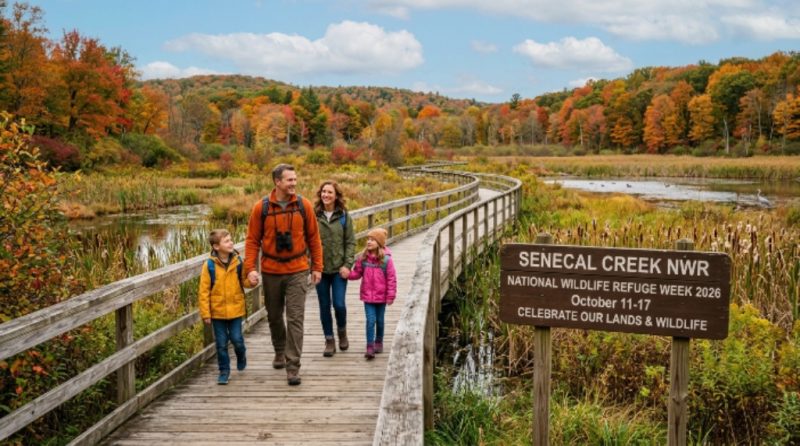
October is one of the best months to spend time outdoors in the United States. The summer heat has faded. Leaves are turning gold and red. Migratory birds are on the move. And for one full week every year, the country turns its attention to one of its greatest conservation achievements: the National Wildlife Refuge System.
In 2026, National Wildlife Refuge Week runs from October 10 to 17. This is also the perfect anchor for a full month of outdoor adventure, since October is an outstanding time to visit any of the more than 570 wildlife refuges spread across all 50 states. Whether you are an experienced birder, a casual hiker, a wildlife photographer, or a family looking for a meaningful outdoor experience, this is your invitation to go explore.
What National Wildlife Refuge Week Is and Why It Matters
The National Wildlife Refuge System is managed by the US Fish and Wildlife Service. It covers more than 95 million acres of land and water, from coastal marshes in Florida to prairie grasslands in North Dakota, from Alaskan tundra to desert wetlands in New Mexico. More than 700 species of birds, 220 species of mammals, 250 reptile and amphibian species, and more than 1,000 species of fish call these refuges home. Additionally, more than 280 threatened or endangered plants and animals find protection here.
The week-long celebration was first established in 1995 and has been held every second full week of October ever since. Congress has formally recognized the occasion, acknowledging the system’s vital role in wildlife conservation, recreation, and local economies. Wildlife refuges pump 3.2 billion dollars per year into regional economies and support more than 41,000 jobs across the country.
Therefore, a visit to your nearest refuge during this week is not simply a leisure activity. It is a direct contribution to public awareness of one of America’s most important conservation networks.
Key Dates for October 2026
The entire month of October offers great opportunities to explore wildlife refuges. However, the core celebration and its special programming are concentrated in the second full week of the month.
| Date | Event |
| Saturday, October 10 | Urban Wildlife Conservation Day — the official kickoff |
| Sunday, October 11 | Free admission day at all fee-charging refuges |
| October 10–17 | National Wildlife Refuge Week — core celebration |
| October 1–31 | Peak season for fall migration and autumn trail conditions |
Urban Wildlife Conservation Day on October 10 recognizes the 101 national wildlife refuges located in and near cities across the United States. These urban refuges play a special role in connecting people from all backgrounds to nature, often serving communities that would otherwise have limited access to open public land.
On Sunday, October 11, any refuge that normally charges an entrance fee will waive it for the day. This is a perfect opportunity to visit a refuge you have never been to before without worrying about cost. Nearly 500 national wildlife refuges and wetland management districts are open to the public and offer free admission year-round, so the fee-waiver day extends your options even further.
Why October Is the Best Month to Visit a Wildlife Refuge
Visiting a wildlife refuge in October offers a very different experience from spring or summer. The crowds are smaller. The colors are richer. The wildlife is more active and often easier to spot.
October sits in the heart of fall migration season. Millions of birds travel through the United States on their way south from summer breeding grounds in Canada and Alaska. Refuges sit along major migratory flyways, making them some of the best places in the country to watch birds during this period. Sandhill cranes, tundra swans, snow geese, warblers, and raptors of all kinds move through in enormous numbers during this time.
Additionally, October brings cooler temperatures that make hiking, paddling, and wildlife drives far more comfortable than summer visits. Mosquito activity drops significantly. Dawn and dusk, traditionally the best hours for wildlife activity, arrive earlier, making early-morning outings more accessible for families.
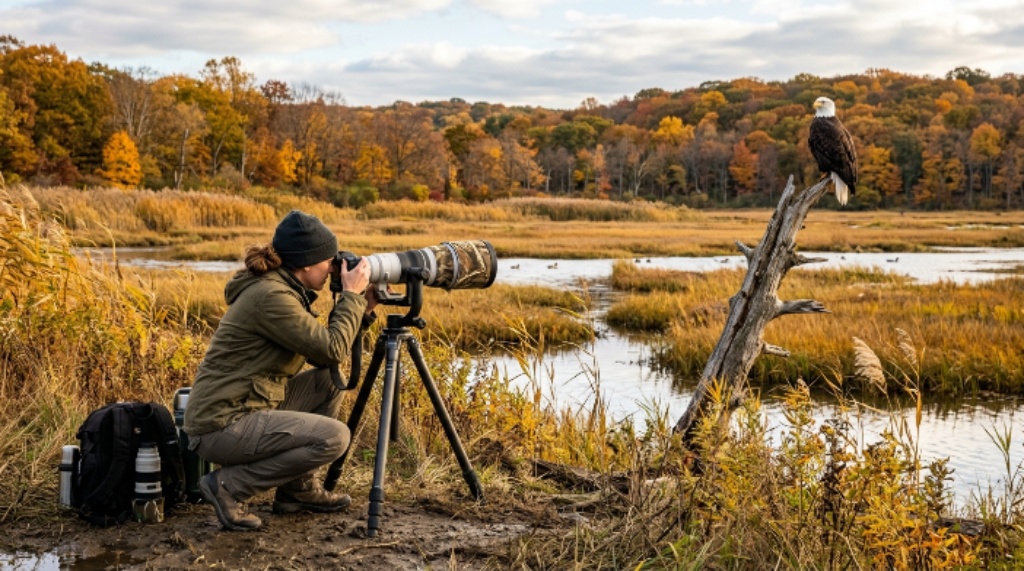
For photographers, the combination of autumn foliage, golden morning light, and active wildlife creates some of the most visually compelling conditions of the entire year.
Scenic Trails Worth Exploring This October
Estuary Boardwalk Trail at Nisqually, Washington
Nisqually National Wildlife Refuge near Olympia, Washington, offers one of the most beautiful trail systems in the Pacific Northwest. The Estuary Boardwalk Trail and its connecting Twin Barns Loop form a scenic four-mile path through freshwater wetlands, tidal flats, and forest with views of the Nisqually River and Puget Sound. In October, visitors can expect to see wood ducks, Caspian terns, bald eagles, great blue herons, and harbor seals. Early morning is the best time for songbirds, while wildlife viewing on the estuary peaks just after high tide.
Wildlife Drive at J.N. Ding Darling, Florida
Sanibel Island in Florida is home to one of the most popular wildlife drives in the entire refuge system. The J.N. Ding Darling National Wildlife Refuge features a four-mile drive through mangrove forest, cordgrass marsh, and hardwood hammocks. Close-up views of wading birds, shorebirds, roseate spoonbills, and raptors are common. Bicycling is also popular on the paved route. October is a great time to visit Florida refuges before the heat of the following year returns.
Laurel Hill Wildlife Tour at Savannah, Georgia and South Carolina
The Savannah National Wildlife Refuge spans the border between Georgia and South Carolina along the Savannah River. Its self-guided Laurel Hill Wildlife Tour covers four miles of earthen dikes through hardwood hammocks and past freshwater pools. October through April is the best window for birding at Savannah, with migrating waterfowl, wading birds, and alligators all visible during fall visits.
Auto Tour Route at Tule Lake, California
Tule Lake National Wildlife Refuge in northern California sits along the Volcanic Legacy Scenic Byway and offers one of the most dramatic wildlife viewing experiences in the American West. Sandhill cranes, tundra swans, ducks, geese, and bald eagles all move through this area during October. An alternative east-side route gives access to additional hiking and seasonal views of sandhill cranes gathering in the thousands.
Visitor Center Boardwalk at Merritt Island, Florida
Merritt Island National Wildlife Refuge on Florida’s Space Coast offers a fully accessible boardwalk trail from the visitor center. The trail provides excellent wildlife viewing and birding with multiple overlooks across its length. Merritt Island sits adjacent to Kennedy Space Center and is one of the most species-diverse refuges in the entire system. Alligators are visible year-round, and October brings strong bird activity as migratory species arrive from the north.
Wildlife to Look For During Refuge Week
October is one of the most rewarding months for wildlife encounters at refuges across the country. The following table highlights what to expect by region.
| Region | Species to Watch For |
| Pacific Northwest | Bald eagles, harbor seals, wood ducks, great blue herons, warblers |
| Northeast | Canada geese, shorebirds, monarch butterflies, white-tailed deer |
| Southeast | Alligators, roseate spoonbills, wading birds, manatees (coastal Florida) |
| Midwest | Sandhill cranes, snow geese, tundra swans, dabbling ducks |
| Great Plains | Pronghorn, bison, prairie dogs, migrating raptors |
| Mountain West | Elk, mule deer, moose, tundra swans, golden eagles |
| Southwest | Roadrunners, javelinas, hummingbirds, migrating hawks |
| Alaska | Brown bears, moose, caribou, Pacific flyway waterfowl |
Many refuges also protect imperiled species that visitors rarely encounter in other settings. These include whooping cranes in the Gulf Coast corridor, Florida scrub-jays on scrublands, and black-footed ferrets on reintroduction sites in the Great Plains.
Events and Activities During the Week
The week brings structured programming to refuges across the country. Since 1995, national wildlife refuges have held festivals, educational programs, guided tours, and other events to celebrate the occasion. While specific 2026 programming will be announced closer to the week, here is what visitors can typically expect.
- Guided ranger hikes through refuge habitats with species identification and ecological interpretation
- Birding walks at dawn and dusk during peak migration hours
- Wildlife photography workshops for beginners and experienced photographers
- Butterfly and dragonfly monitoring programs at select refuges
- Canoe and kayak tours through marsh and estuary systems
- Family-friendly scavenger hunts and junior ranger activities
- Invasive species education sessions followed by volunteer opportunities
- Sunset walks at special observation points
The US Fish and Wildlife Service also partners with the Public Lands Alliance to host free walking events at refuges across the country during Refuge Week. In recent years, more than 35 such events have taken place simultaneously, with a virtual walking option available for those who cannot attend in person.
Check the US Fish and Wildlife Service website at fws.gov and search for your nearest refuge to view specific events as October draws closer.
How to Find Your Nearest Wildlife Refuge
One of the most surprising facts about the National Wildlife Refuge System is how accessible it is. There are more than 570 refuges spread across all 50 states and several US territories. Most Americans live within an hour’s drive of at least one refuge.
The US Fish and Wildlife Service maintains a refuge finder tool at fws.gov that allows you to search by state, zip code, or activity type. Each refuge page includes maps, trail information, current conditions, and details on what activities are permitted.
Additionally, the RefugeConnect app provides mobile access to refuge maps, wildlife species lists, and visitor information. This is particularly useful when you are exploring a large refuge with multiple trail systems and observation points.
When planning a visit, it helps to check the refuge’s social media pages and local friends group websites in the days before you go. These sources are often more current than the official pages and can alert you to recent wildlife sightings, trail closures, or newly opened viewing areas.
Tips for Making the Most of Your Visit
A little preparation makes a significant difference when visiting a wildlife refuge during this busy and rewarding season.
- Arrive early. The first hour after sunrise is the most active time for birds and mammals, and parking areas fill quickly during Refuge Week events.
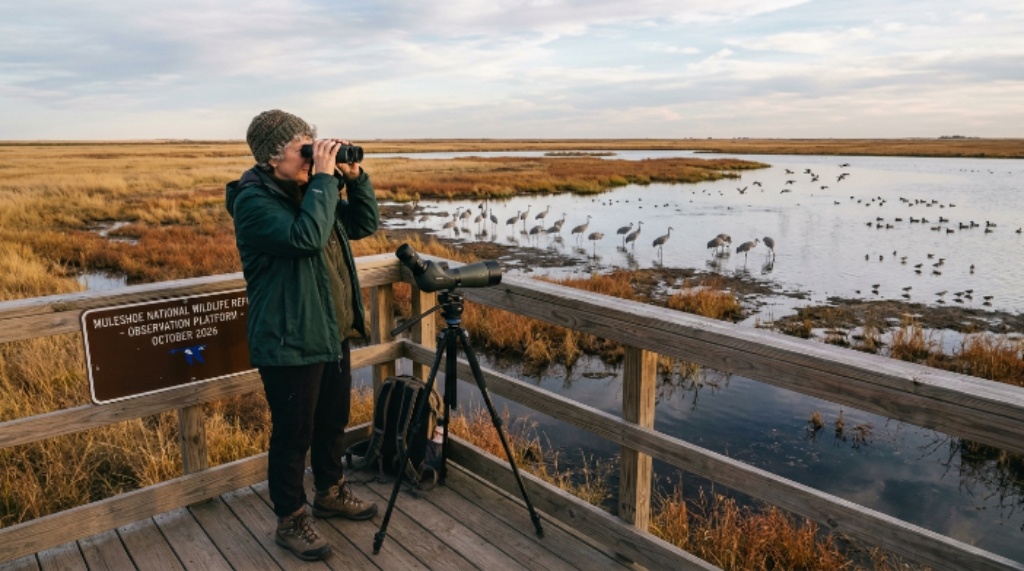
- Bring binoculars. Even a basic pair transforms the wildlife viewing experience. Many refuges also have scopes set up at observation platforms that visitors can use for free.
- Wear earth-toned clothing. Bright colors can startle wildlife and reduce sighting opportunities.
- Move slowly and stay quiet on trails. Quick movement and noise are the main reasons visitors miss wildlife that was right in front of them.
- Carry water and snacks. Many refuges have limited facilities, and full-day visits pass quickly when the wildlife is active.
- Use a checklist app. Apps like eBird allow you to log bird species as you spot them and contribute your sightings to a global citizen science database that helps researchers track migration patterns in real time.
- Respect trail boundaries and wildlife distance guidelines. Approaching wildlife too closely harms the animals and can also be dangerous for visitors.
- Pack out all trash. Wildlife refuges depend on clean habitats to function, and visitor waste can have direct negative impacts on the species the refuge exists to protect.
The Economic and Community Value of Wildlife Refuges
Wildlife refuges do much more than protect animals. They support entire regional economies and provide measurable health and quality-of-life benefits to nearby communities. The National Wildlife Refuge System generates 3.2 billion dollars annually in economic activity and supports more than 41,000 jobs across the country through tourism, visitor spending, and related employment.
Urban refuges play an especially important role in this picture. With 101 refuges located in or near cities, the system serves millions of urban residents who might otherwise have no nearby access to wild spaces. Research consistently shows that access to nature reduces stress, improves mental health, and encourages physical activity. These benefits are available to every visitor, at every income level, at nearly every refuge in the system.
Therefore, supporting these lands through visits, donations to local friends groups, and engagement with refuge programming is one of the simplest and most direct ways any individual can invest in conservation and community wellbeing.
Conclusion
National Wildlife Refuge Week 2026 runs from October 10 to 17, with Urban Wildlife Conservation Day on Saturday, October 10, kicking off the celebration and free admission available at all fee-charging refuges on Sunday, October 11. The entire month of October offers ideal conditions for exploring the more than 570 refuges that make up the National Wildlife Refuge System, with fall migration in full swing, cooler temperatures, and outstanding opportunities for hiking, birding, wildlife photography, and ranger-led programs. Scenic trails like the Estuary Boardwalk at Nisqually, the Wildlife Drive at Ding Darling, and the Laurel Hill Tour at Savannah reward visitors with close encounters with wildlife in some of the country’s most beautiful natural settings. From sandhill cranes and bald eagles to alligators and bison, October brings a remarkable diversity of wildlife encounters. Finding your nearest refuge, arriving early, moving quietly, and bringing binoculars are the simplest ways to make every visit count. This October, make the most of one of America’s greatest conservation gifts.
Frequently Asked Questions
When exactly is National Wildlife Refuge Week in 2026?
National Wildlife Refuge Week 2026 runs from Saturday, October 10, through Saturday, October 17. The week begins with Urban Wildlife Conservation Day on October 10 and includes free admission at all fee-charging refuges on Sunday, October 11. The celebration is held during the second full week of October every year.
How many national wildlife refuges are there, and how do I find the one nearest to me?
The National Wildlife Refuge System includes more than 570 refuges spanning all 50 states and several US territories. You can find your nearest refuge using the refuge finder tool on the US Fish and Wildlife Service website at fws.gov. Simply enter your zip code or state to see a list of nearby refuges with maps, trail information, and visitor details.
Are there admission fees to visit wildlife refuges?
Nearly 500 national wildlife refuges and wetland management districts are open to the public with free admission year-round. A smaller number charge entrance fees, and these fees are fully waived on Sunday, October 11, 2026, as part of the Refuge Week celebration. The official refuge page for each location lists current fee information.
What activities can visitors do during National Wildlife Refuge Week?
Activities vary by refuge but commonly include guided ranger hikes, birding walks at dawn and dusk, wildlife photography workshops, canoe and kayak tours, butterfly monitoring programs, family scavenger hunts, junior ranger activities, and sunset walks. The US Fish and Wildlife Service also partners with the Public Lands Alliance to host free walking events at refuges across the country during the week, with a virtual option available for those who cannot attend in person.
Why is October such a good time to visit a wildlife refuge?
October sits at the peak of fall migration season, when millions of birds pass through the United States on their way south. Refuges along the major flyways offer outstanding birding during this period. Cooler temperatures make hiking and paddling more comfortable, mosquito activity is lower, and autumn foliage creates spectacular scenery for photographers. October is widely considered one of the best months of the year to visit a national wildlife refuge anywhere in the country.
