
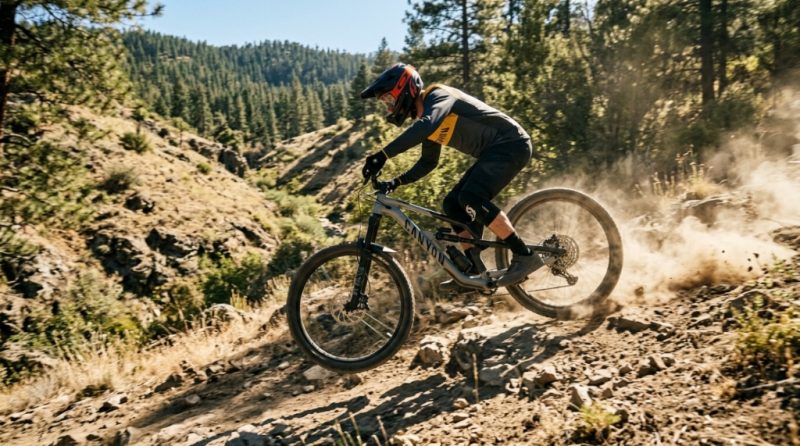
The Canyon Spectral 125 AL 5 tends to work best when you treat it like a modern trail bike: keep the suspension supportive for climbs, then let the tires and suspension deliver traction and control on descents. If you care about Mountain Bike Climbing Ability, the biggest gains usually come from setup—sag, rebound, tire choice, and cockpit fit—more than chasing lighter parts.
Climbing and descending performance is where trail bikes get exposed. A bike can feel great in a parking-lot spin and still disappoint once the trail points up or down. On climbs, you notice bob, traction loss, and front-end wandering. On descents, you notice braking stability, cornering grip, and whether the suspension feels harsh or overwhelmed. This article is structured in Q&A format with snippet-ready answers so you can quickly understand what to evaluate and how to set the bike up for your terrain.
Is the Canyon Spectral 125 AL 5 good at climbing?
Direct answer: It can climb well for a trail bike if the suspension is set to a supportive baseline and your tire pressures aren’t too low or too high.
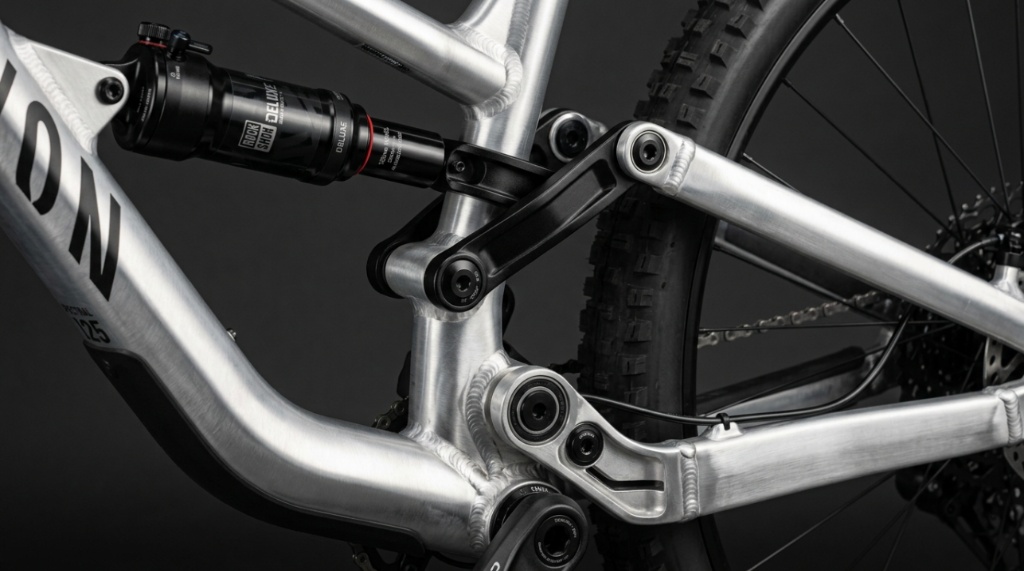
Trail-bike climbing performance is about efficiency and traction. If your rear suspension is too soft, the bike can feel like it “sits down” and wastes energy. If it’s too firm, the tire can break traction on loose climbs.
People also ask: What is mountain bike climbing ability?
Direct answer: It’s how efficiently a bike turns pedaling into forward motion while maintaining traction and keeping the front wheel planted on steep climbs.
What setup changes improve climbing ability the most?
Direct answer: Correct sag, rebound that doesn’t pogo, and a tire tread/pressure combination that grips your local dirt are the biggest climbing upgrades.
- Sag: Too much sag can feel wallowy; too little can reduce traction.
- Rebound: Too fast feels bouncy; too slow packs down on repeated hits.
- Tire pressure: Too high slips; too low squirm wastes energy.
How do you know if your suspension is hurting your climbs?
Direct answer: If the bike bobs noticeably when you pedal seated, or if it feels like it sinks and never recovers, your setup is likely too soft or underdamped.
Pay attention to where you feel energy loss: is it the rear end squatting, the front end wandering, or the rear tire slipping? Each points to a different adjustment.
How does it perform on descents?
Direct answer: Descending confidence comes from stability under braking, predictable cornering, and suspension that stays composed over repeated bumps.
On descents, you’re testing control more than speed. A good trail bike lets you brake late without feeling like the front end dives uncontrollably. It should also keep the rear tire tracking instead of chattering.
People also ask: What matters more on descents—suspension or tires?
Direct answer: Both matter, but tires (tread/compound/casing) often change descending grip more dramatically than small suspension tweaks.
What braking traits should you evaluate on descents?
Direct answer: Evaluate braking power, modulation, and heat consistency—especially on longer descents where fade and hand fatigue show up.
- Can you slow down smoothly without skidding?
- Does lever feel stay consistent through the descent?
- Do you feel confident braking into corners?
How does body position affect climbing and descending performance?
Direct answer: Body position is a performance multiplier: forward and centered for traction on climbs, low and balanced for stability on descents.
A bike can only do so much if your cockpit is uncomfortable or your bar position forces you into poor posture. Small adjustments—lever angle, bar roll, saddle position—can unlock control quickly.
Pushing the bike hard on sharp, rocky descents increases your risk of pinch flats. Before you head out to test its limits, make sure you know change a bike inner tube so a flat tire doesn’t ruin your ride
What trail conditions change how it climbs and descends?
Direct answer: Loose dirt demands traction and tire bite; wet roots demand predictable braking and softer compound tires; rocky trails demand stability and suspension composure.
That’s why “climbing ability” and “descending performance” aren’t absolute—they’re terrain-dependent. The right tire and pressure for your trails often makes the biggest difference.
Quick comparison table: climbing vs descending priorities
Direct answer: Use this table to choose which setup direction to prioritize if you can’t optimize everything at once.
| Goal | What to prioritize | Common mistake |
|---|---|---|
| Better climbs | Supportive suspension + efficient tires | Over-soft setup that bobs |
| Better descents | Grip-focused tires + stable braking | Over-inflated tires that skid |
| All-round | Balanced sag + correct rebound | Ignoring setup and blaming the bike |
Conclusion: How does it climb and descend in real life?
Direct answer: It’s best when set up for support on climbs and traction on descents, with tires matched to your local conditions and brakes you trust.
If you want a practical next step, tell me: your weight with gear, whether your trails are loose or hardpack, and the length of your typical descents. I can suggest a starting sag range and tire-pressure approach that improves both climbing grip and descending control without making the bike feel sluggish.
FAQ
How can I improve mountain bike climbing ability without buying parts?
Direct answer: Set sag correctly, tune rebound, use the right tire pressure, and keep the drivetrain clean—those changes are often bigger than hardware upgrades.
Why does my trail bike feel slow on climbs?
Direct answer: Common causes are over-soft suspension, dragging brakes, high-rolling-resistance tires, or a dirty drivetrain.
What makes a descent feel unstable?
Direct answer: Too-high tire pressure, poor braking control, and harsh suspension setup are common reasons descents feel sketchy.
Should I tune suspension for climbs or descents?
Direct answer: Start with a balanced baseline, then bias slightly toward your most common terrain; tires can often cover the rest.
Do bigger rotors help descending?
Direct answer: Often yes—bigger rotors can improve braking consistency and reduce fade on longer descents.
How do I know if my rebound is wrong?
Direct answer: Too fast feels bouncy and uncontrolled; too slow feels harsh and “stuck down” over repeated bumps.
What’s the simplest test loop for climbs and descents?
Direct answer: A loop with a 5–10 minute steady climb, a cornering section, and a short rough descent gives the clearest feedback.
