

Long before a baby learns to say “more,” their feeding routine begins shaping lifelong eating habits. That’s why choosing the right infant puree maker and understanding baby feeding essentials matters far more than most parents realize. An infant puree maker is a kitchen device designed to steam, blend, and prepare baby food quickly while preserving nutrients, helping parents create fresh homemade meals with greater control over ingredients and texture.
What Are the Most Important Baby Feeding Essentials for New Parents?
The most important baby feeding essentials include safe feeding tools, age-appropriate utensils, food storage solutions, and an infant puree maker for preparing fresh homemade baby food efficiently.
When babies begin transitioning from milk to solids, having the right feeding equipment can make the process easier, safer, and more enjoyable. Parents often discover that preparation and organization are just as important as selecting nutritious foods.
Essential baby feeding items typically include:
- Infant puree maker
- Soft-tip baby spoons
- BPA-free feeding bowls
- Silicone bibs
- Suction plates
- Baby food storage containers
- Freezer trays for meal prep
- Sippy cups or straw cups
- High chair with safety straps
- Food-grade storage bags
Parents interested in comparing different machines can explore this detailed guide to the best baby food maker options for preparing homemade infant meals, which highlights features that simplify everyday feeding routines.
According to recommendations from pediatric nutrition experts, introducing a variety of nutrient-rich foods during infancy supports healthy growth and helps babies become familiar with different flavors and textures.
Why Is an Infant Puree Maker Considered a Valuable Feeding Tool?
An infant puree maker saves time, simplifies meal preparation, and allows parents to create fresh baby food without unnecessary additives, preservatives, or excess sugar.
Many families begin with store-bought baby food because it appears convenient. However, preparing homemade purees provides greater control over ingredients and consistency.
A quality infant puree maker typically performs multiple functions:
- Steaming vegetables and fruits
- Blending ingredients into smooth textures
- Reheating prepared meals
- Defrosting frozen portions
- Reducing overall meal-prep time
Instead of washing multiple kitchen appliances, parents can often prepare an entire batch using one machine.
This convenience becomes especially valuable when preparing foods such as:
- Sweet potato puree
- Apple puree
- Pear puree
- Carrot puree
- Pea puree
- Banana blends
- Avocado mash
- Chicken and vegetable combinations
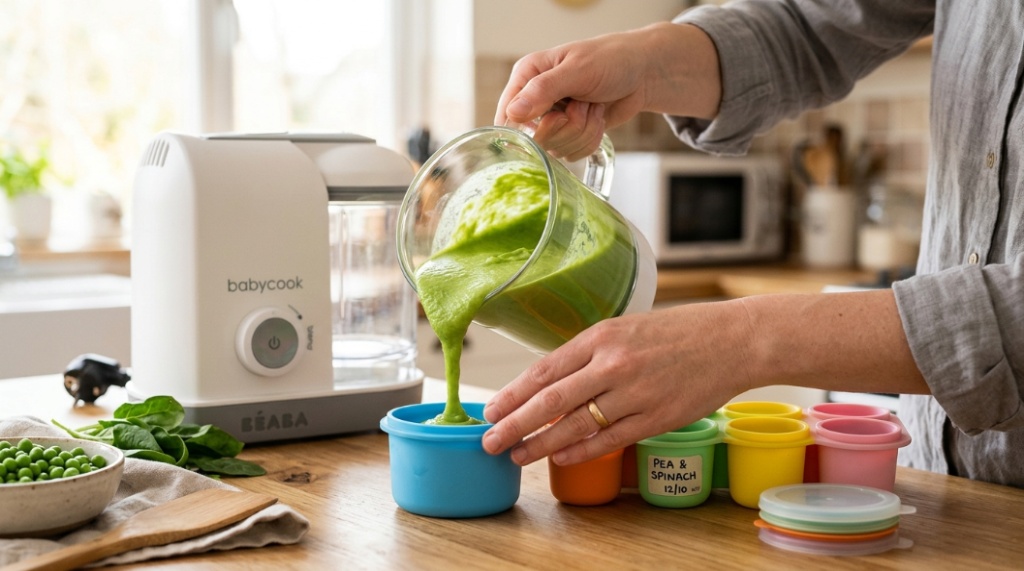
How Does an Infant Puree Maker Work?
An infant puree maker works by steaming ingredients and blending them into age-appropriate textures using a single appliance.
Most modern units follow a simple process:
- Wash and prepare ingredients.
- Add fruits, vegetables, or proteins.
- Steam ingredients until soft.
- Blend to the desired consistency.
- Serve immediately or store portions.
The biggest advantage is maintaining consistency throughout preparation. Babies require different textures as they develop feeding skills.
For example:
| Baby Age | Recommended Texture |
|---|---|
| 4–6 Months | Very smooth puree |
| 6–8 Months | Slightly thicker puree |
| 8–10 Months | Mashed food with small lumps |
| 10–12 Months | Soft chopped finger foods |
Many puree makers allow parents to adjust blending levels, making it easier to support developmental milestones.
What Features Should Parents Look for in an Infant Puree Maker?
The best infant puree maker offers easy cleaning, efficient steaming, strong blending performance, safety certifications, and adequate capacity for batch preparation.
Before purchasing, parents should evaluate practical features instead of focusing only on marketing claims.
Key features include:
- One-touch operation
- Dishwasher-safe components
- BPA-free materials
- Automatic shut-off
- Multiple blending settings
- Compact storage design
- Large water reservoir
- Meal-prep capacity
Ease of cleaning is particularly important because baby food residue can accumulate quickly inside blending components.
Parents should also monitor digestive responses when introducing new foods. Understanding common childhood digestive concerns can help identify whether symptoms stem from food sensitivities or other conditions. Helpful information is available in this guide discussing gastritis symptoms and treatment in children.
What Foods Can Be Prepared Using an Infant Puree Maker?
An infant puree maker can prepare fruits, vegetables, grains, proteins, and combination meals suitable for various developmental stages.
The flexibility of these appliances allows parents to expand their baby’s menu gradually.
Fruit Purees
- Apple
- Pear
- Peach
- Mango
- Banana
- Apricot
Vegetable Purees
- Sweet potato
- Carrot
- Peas
- Pumpkin
- Broccoli
- Butternut squash
Protein-Based Meals
- Chicken puree
- Turkey puree
- Lentil blends
- Bean mixtures
- Fish and vegetables
Mixed Recipes
- Apple and sweet potato
- Pear and oats
- Chicken and carrots
- Peas and spinach
- Pumpkin and quinoa
Offering variety introduces different nutrients while helping babies develop acceptance of new flavors.
Is Homemade Baby Food Better Than Store-Bought Baby Food?
Homemade baby food offers greater ingredient control and freshness, while store-bought options provide convenience and portability.
Neither option is universally better. The ideal choice depends on lifestyle, budget, and feeding goals.
| Factor | Homemade Baby Food | Store-Bought Baby Food |
|---|---|---|
| Ingredient Control | Excellent | Limited |
| Freshness | High | Variable |
| Convenience | Moderate | Excellent |
| Customization | High | Limited |
| Long-Term Cost | Often Lower | Often Higher |
| Preparation Time | Required | Minimal |
Many families successfully combine both approaches. Homemade meals can be prepared at home, while packaged options remain available for travel and emergencies.
How Can Parents Safely Introduce Solid Foods?

Parents should introduce solid foods gradually, monitor reactions carefully, and offer age-appropriate textures while following pediatric guidance.
Most babies show readiness signs around six months, although individual development varies.
Common readiness indicators include:
- Good head control
- Ability to sit with support
- Interest in family meals
- Reduced tongue-thrust reflex
- Ability to swallow food effectively
Experts generally recommend introducing one new food at a time and observing for several days before adding another item.
This approach helps identify possible reactions to foods such as:
- Eggs
- Dairy products
- Peanuts
- Tree nuts
- Fish
- Soy
- Wheat
How Can Parents Save Time When Preparing Homemade Baby Food?
Batch preparation, proper storage, and organized meal planning significantly reduce the time required for homemade baby food preparation.
Busy parents often assume homemade feeding requires daily cooking. In reality, a few preparation sessions each week can provide enough meals for several days.
Time-saving strategies include:
- Preparing multiple vegetables simultaneously
- Freezing puree portions in trays
- Labeling storage containers
- Creating weekly feeding schedules
- Combining ingredients into balanced recipes
- Using an all-in-one infant puree maker
Many families dedicate one afternoon each week to preparing batches of nutritious meals that can be refrigerated or frozen for future use.
What Nutrients Should Parents Prioritize During the First Year?
Iron, healthy fats, protein, vitamins, and essential minerals are among the most important nutrients during infancy.
Rapid physical and neurological growth increases nutritional demands during the first year.
Important nutrient sources include:
| Nutrient | Common Food Sources |
|---|---|
| Iron | Lentils, fortified cereals, meats |
| Protein | Chicken, beans, fish, yogurt |
| Healthy Fats | Avocado, salmon, nut butters |
| Vitamin C | Strawberries, oranges, broccoli |
| Calcium | Yogurt, cheese, fortified foods |
| Zinc | Meat, legumes, whole grains |
Offering diverse foods throughout infancy helps support growth, immunity, and cognitive development.
Can an Infant Puree Maker Support Baby-Led Weaning?
Yes. An infant puree maker can complement baby-led weaning by preparing soft foods and transitional textures.
Baby-led weaning encourages self-feeding with appropriately sized soft foods. However, many families prefer a combination approach that includes both finger foods and purees.
Suitable transitional foods include:
- Mashed avocado
- Soft steamed carrots
- Pureed sweet potatoes
- Banana mash
- Oatmeal blends
- Soft pear slices
This balanced strategy allows babies to practice self-feeding skills while still receiving nutrient-dense purees.
Conclusion: Is an Infant Puree Maker Worth Adding to Your Baby Feeding Essentials?
Yes. An infant puree maker remains one of the most practical baby feeding essentials for parents who want fresh, customizable meals without spending excessive time in the kitchen.
By simplifying steaming, blending, and meal preparation, these appliances help families provide nutritious homemade food while maintaining consistency and convenience. Combined with proper feeding tools, safe food storage, and a thoughtful introduction to solids, an infant puree maker can support a smoother feeding journey from the first spoonful through the transition to family meals.
Every baby develops differently, but establishing healthy feeding habits early creates a strong foundation for future nutrition. If you’re evaluating available options, reviewing trusted baby food maker comparisons can help you select a model that fits your family’s needs and feeding goals.
Ready to simplify meal preparation and gain greater control over your baby’s nutrition? Start building your feeding toolkit today and choose solutions that make healthy homemade meals easier, safer, and more enjoyable.
Frequently Asked Questions About Infant Puree Makers
Do I need an infant puree maker to make homemade baby food?
No. A regular blender or food processor can prepare baby food. However, an infant puree maker combines steaming and blending in one appliance, reducing preparation time and cleanup.
At what age can babies start eating purees?
Most babies begin purees around six months of age when they demonstrate developmental readiness signs such as head control and the ability to sit with support.
How long can homemade baby puree be stored?
Fresh puree typically remains safe in the refrigerator for up to 48 hours. Frozen portions can often be stored for several months when sealed properly.
Can I prepare meat in an infant puree maker?
Yes. Many infant puree makers can steam and blend chicken, turkey, fish, and other protein sources into smooth textures appropriate for babies.
Are infant puree makers easy to clean?
Most modern models include removable components and dishwasher-safe parts. Cleaning requirements vary by manufacturer and design.
Can I freeze food prepared with an infant puree maker?
Yes. Freezing individual portions is one of the most effective meal-prep methods for homemade baby food and helps reduce daily cooking time.
What is the best first food to puree for a baby?
Popular first foods include sweet potatoes, bananas, pears, apples, avocado, carrots, and peas because they are soft, nutrient-rich, and easy to digest.
